Welcome to Westwood, MA: The Essential Guide for Young Families
Explore Westwood’s quiet village vibe: 17 miles to Boston, 16K residents, K-12 schools, Hale Reservation, Route 128 rail, and $1.2M homes.
Written ByMargie Gundersheim
PublishedJuly 24, 2026
UpdatedAugust 4, 2026
We're the Gundersheim Group Real Estate team, award-winning Realtors serving Newton, MA and Greater Boston. We guide buyers and sellers from first search to closing. Serving Newton, Brookline, Belmont, Lexington, Wellesley, Boston, Medfield, Needham, Natick, Westwood, Dedham, Wayland and Watertown, MA.
Westwood, MA
Region
In July 2026, the median sale price for homes in Westwood, MA was $1,092,500, down 12.6% from a year earlier.
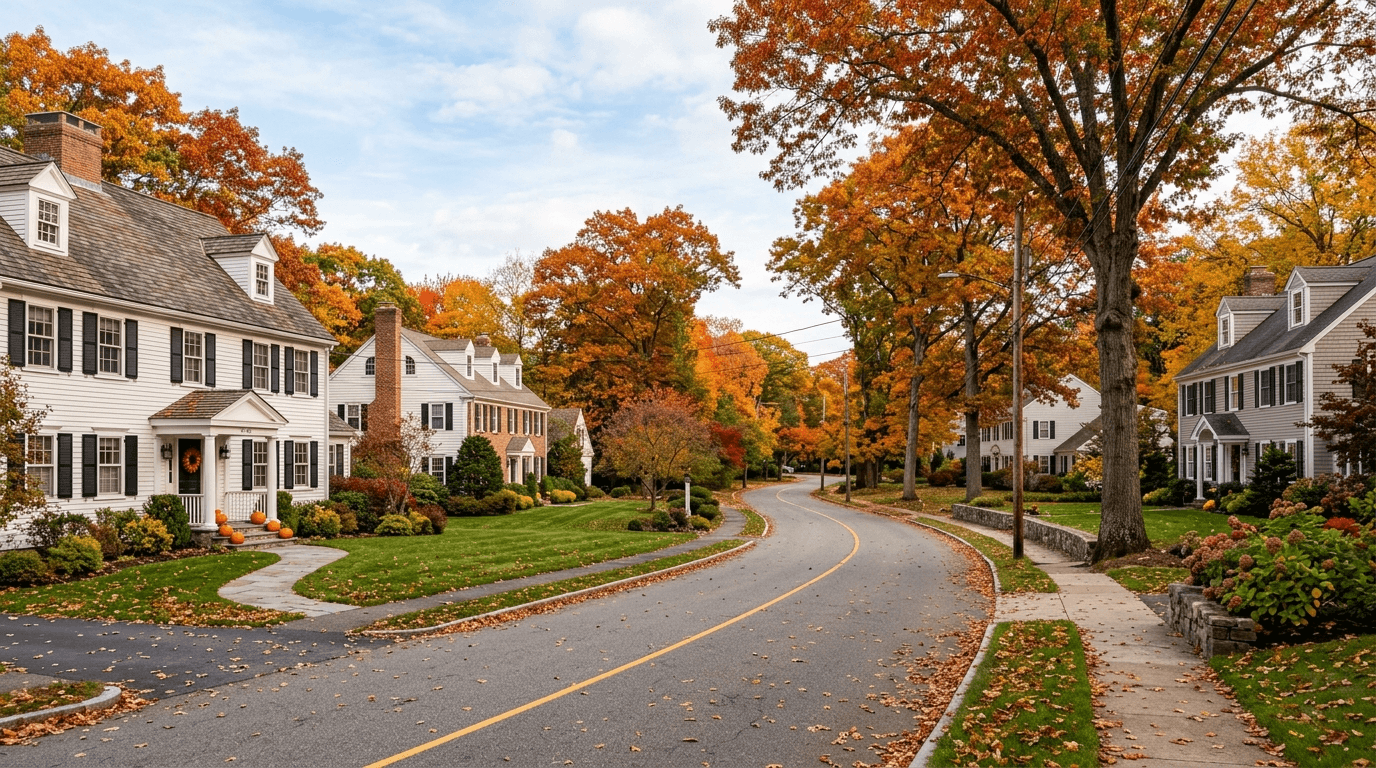
Year after year, Westwood shows up near the top of those "best places to raise a family" lists around Greater Boston. Spend a single weekend here and you'll get it. Kids ride their bikes to friends' houses. Neighbors wave from their front porches. The schools and the parks aren't just amenities—they're where the whole community actually comes together. If you're a young family thinking about putting down roots south of the city, let me walk you through what everyday life in Westwood really feels like.
Is Westwood, MA a Good Place to Raise a Young Family?
Yes—Westwood is one of the most family-focused suburbs in Greater Boston, pairing quiet, safe neighborhoods with a strong public school system and a warm, active community. With a population of around 16,000 and a spot roughly 17 miles from downtown Boston, it lands in that rare sweet spot between small-town calm and big-city access.
For most families, it starts with the schools. Westwood Public Schools serve students K through 12 across a handful of neighborhood elementary schools, E.W. Thurston Middle School, and Westwood High School. When I tour homes with parents here, the very first question is almost always, "Which elementary school does this address feed into?" That's a smart instinct—because in Westwood, the neighborhood and the school are woven tightly together.
The day-to-day rhythm matters just as much. Westwood feels genuinely quiet and residential, but don't mistake that for sleepy:
•Safe, walkable neighborhoods where parents feel comfortable letting kids play outside
•Plenty of youth sports and town recreation programs that fill the weekends all year long
•Family-oriented seasonal events that make it easy for newcomers to find their footing
Compare it to a denser, more urban option like Newton, and Westwood offers a noticeably calmer village feel—fewer through-streets, more yard space, and a slower pace that so many of our clients with little ones are specifically chasing. It doesn't hurt that great pediatric care is close by, either. Westwood-Mansfield Pediatric Associates earned 4 out of 4 stars for well-baby care, physician communication, and healthcare promotion from the Massachusetts Healthcare Quality Partners.
How Do Westwood, MA Schools Compare to Other Top Suburban Districts?
Westwood's public schools perform solidly and competitively, but the data tells an honest story: they sit within a strong peer group rather than leading it outright—so it's worth understanding the nuance before you buy for a specific school.
On the 2025 Grade 10 MCAS, Westwood posted 77% in ELA, 77% in Math, and 77% in Science. That's a steady, respectable showing. But stack it up against the neighbors, and Westwood trails a few peers in ELA and Math—Dover-Sherborn, Needham, Hopkinton, and Weston all scored higher in those subjects—while holding its own in Science.
Grade 10 MCAS Performance by District
A peer-district comparison of Grade 10 MCAS results across ELA, Math, and Science. This helps families understand Westwood’s academic profile in the context of other high-performing suburban districts.
I don't share this to talk anyone out of Westwood. I share it because families deserve the full picture. This is a well-resourced district—per-pupil spending sits around $24,700, above the state average—with a student-teacher ratio of about 12:1 and a small, close-knit high school of roughly 900 students. For parents who value individual attention and a tight-knit community, those are real, tangible advantages. But if test-score leadership is your single biggest priority, it's fair to weigh Westwood directly against peers like Dover-Sherborn or Hopkinton before you commit.
Here's the bigger point: Westwood's schools are strong performers in an exceptionally strong regional field. For most young families, that mix of good academics, generous funding, and a genuinely supportive culture is exactly what they're hoping to find.
What Are Homes and Family Neighborhoods Like in Westwood, MA?
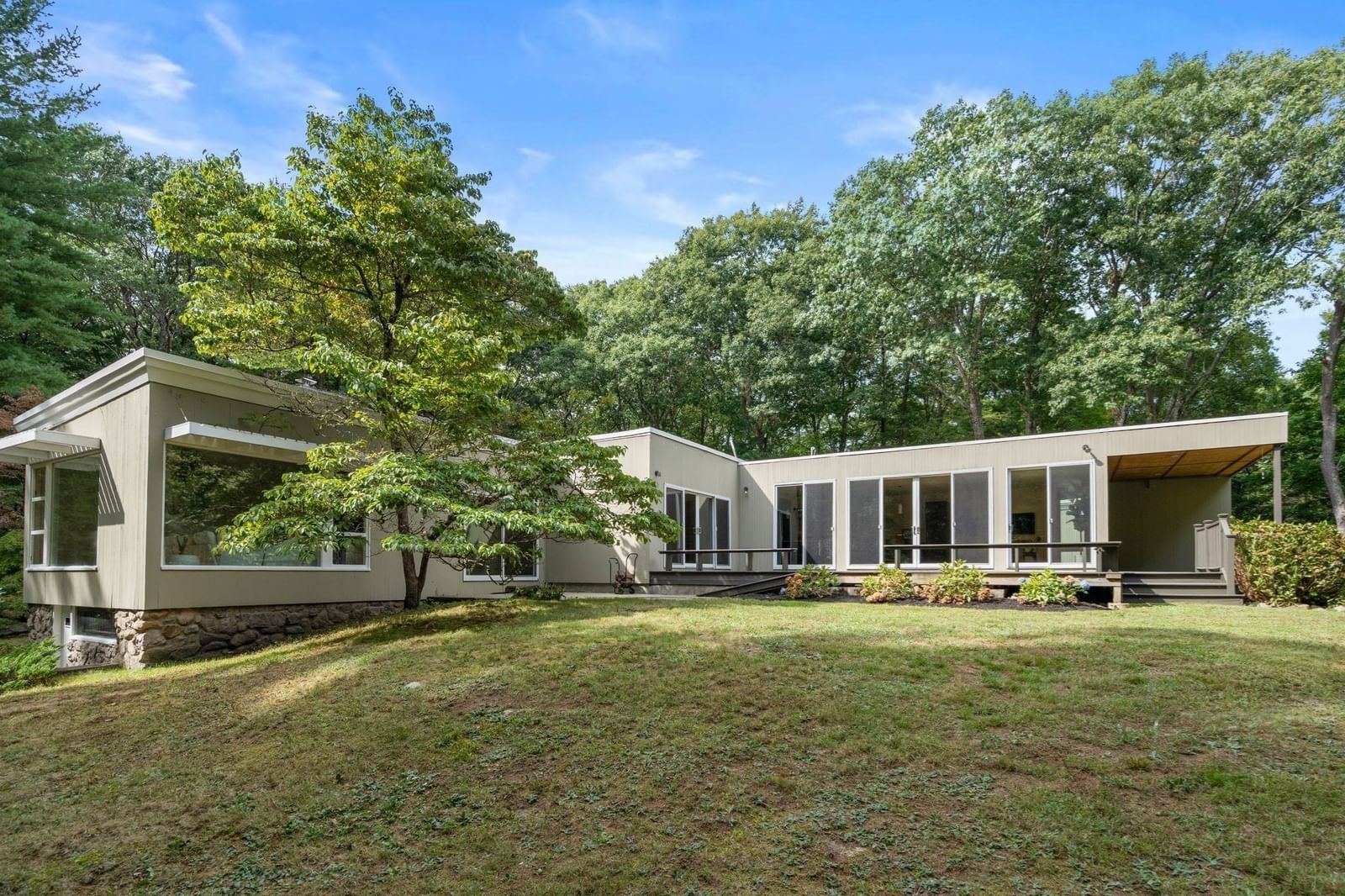
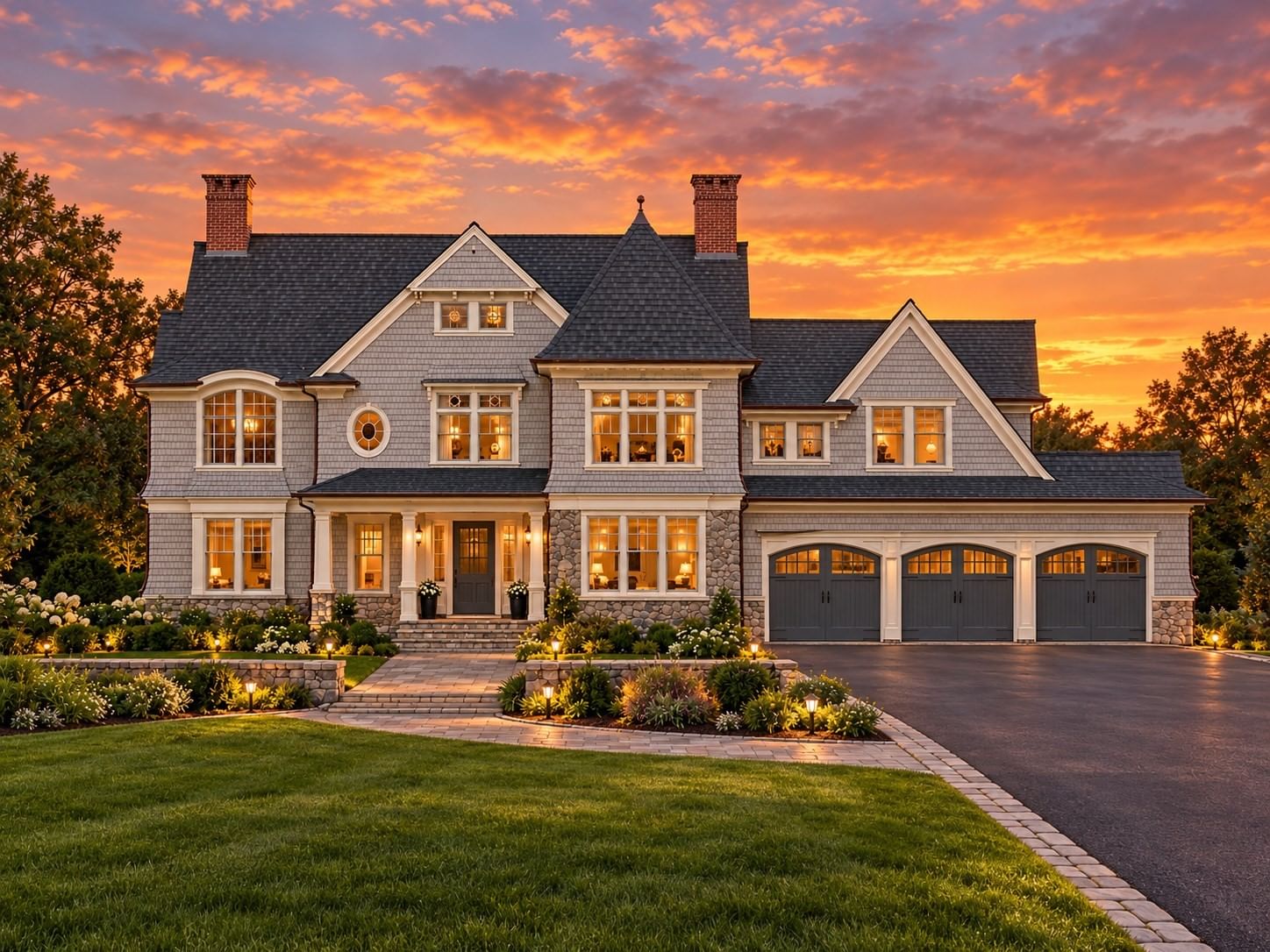
Westwood's housing is anchored by classic New England single-family homes—Colonials, Capes, ranches, and split-levels—alongside newer construction, with each neighborhood offering its own distinct fit for family life. Inventory is tight and competition is real, so getting to know the neighborhoods early gives you a genuine edge.
The typical home value here sits around $1.20M, with the median single-family sale price near $1,235,000 as of early 2026. And homes don't linger—months' supply hovers around 1.8, with the median time on market running about 33 days.
Westwood 2026 Family Buyer Market Snapshot
A quick buyer-oriented snapshot of Westwood’s 2026 single-family market: prices sit around the $1.2M range, inventory is tight, and homes are still moving quickly—important context for families planning school-year timing.
If you're weighing Westwood against its neighbors, price context helps. Westwood generally comes in below Needham, Wellesley, and Dover, while sitting comfortably above more budget-friendly towns like Norwood and Walpole.
Typical Home Values: Westwood vs Nearby Towns
Shows where Westwood fits among nearby family-oriented suburbs: generally less expensive than Needham, Wellesley, and Dover, but notably higher than Norwood and Walpole.
Shows where Westwood fits among nearby family-oriented suburbs: generally less expensive than Needham, Wellesley, and Dover, but notably higher than Norwood and Walpole.
Where you ultimately land comes down to what your family values most—school district, yard space, privacy, or an easier commute. This neighborhood-fit guide is one of the first things I walk buyers through:
Westwood Neighborhood Fit Guide for Families
A scannable neighborhood-fit guide for families comparing school districts, commute convenience, yard space, privacy, and housing style within Westwood.
Housing StyleColonial, cape, and renovated ranch-style homes
Lot DescriptionSpacious yards
Best ForCommuters looking for direct access to the train
PrivacyIncredible privacy
School ReputationGreat elementary school reputation
AccessConvenient access to Norwood shopping and dining
Key AdvantagesLarge, upscale homes with modern layouts
•Sheehan and Martha Jones districts tend to draw families who love classic Colonials and Capes with roomy yards
•The University Station area is ideal for commuting parents who want direct train access
•High Street and the Borderland area offer incredible privacy for those craving a little more separation
Entry-level opportunities do exist—usually in the high $500s to $700s—while most mid-range family homes land in the $750K to $1.1M range. And for families who'd rather trade yard work for free weekends, townhomes and smaller-footprint options pop up periodically, often with modern, open-concept layouts and none of the upkeep of a big lot. These go quickly when they appear, so it pays to be ready.
Where Do Families Gather in Westwood, MA?
Westwood families come together through a mix of sprawling outdoor spaces, a beloved public library, and convenient shopping hubs that make everyday errands feel easy. These are the places that turn a house into a home—and a town into a community.
At the top of the list is Hale Reservation—more than 1,000 acres of woods, ponds, hiking trails, and summer camps that serve as an outdoor backyard for the entire town. Spots like Sen Ki - Hale Reservation give families year-round access to nature just minutes from home, and those summer camps have become a rite of passage for generations of local kids.
Shopping and dining are just as easy to reach. University Station—the open-air center near the Route 128 interchange—anchors the town with big-box essentials and family-friendly dining, while the Westwood Center and Islington village centers cover the everyday errands. And when the kids have earned a treat after an afternoon at the park, Playa Bowls is a local favorite with a stellar 4.8 rating.
Then there's the heart of the town's indoor life: the Westwood Public Library. With a 4.8 rating, it hosts weekly children's activities, story times, and community workshops. For young families still finding their people, the library is one of the warmest, easiest ways to meet other parents.
How Is the Commute from Westwood, MA to Boston?
Westwood offers some of the best commuting access of any southern suburb—two commuter rail stations, Amtrak service, and immediate highway connections that put downtown Boston within roughly 20 to 45 minutes. For working parents, this is often the tipping point.
By rail, the trip to Boston's South Station usually runs 20 to 45 minutes, depending on your route and the time of day. Westwood's standout asset is Route 128 Station, which offers both MBTA Commuter Rail and Amtrak service—a rare pairing that makes the daily Boston commute and longer regional trips equally simple. For something closer to home, Islington Station on the Franklin Line puts the train within easy reach of many family neighborhoods, with a typical ride of 35 to 45 minutes.
Rather drive? Off-peak trips into Boston run about 20 to 35 minutes, while the Route 128 corridor—home to plenty of major employers—is just 15 to 25 minutes away. Rush hour stretches those numbers, naturally, to 45 to 60+ minutes, which is why many of our commuting clients gravitate toward homes within walking or short-driving distance of a station.
This is one area where Westwood truly shines against towns farther out. That combination of dual rail service and quick highway access is genuinely hard to beat for families juggling a Boston job with suburban life.
What's the Bottom Line for Young Families Considering Westwood, MA?
Westwood delivers exactly what most young families are looking for: safe neighborhoods, a well-funded and community-minded school system, plenty of outdoor space, and standout commuter access—all at a price point that's competitive within its peer group.
It's a seller's market with limited inventory, so preparation is everything. Knowing which neighborhoods feed into which schools, understanding how fast homes move, and being ready to act when the right listing appears will make all the difference. Whether you're comparing Westwood to a more urban option like Newton or weighing it against neighbors like Needham and Walpole, the goal stays the same—finding the home that fits your family's future, not just this year's needs.
When you're ready to explore Westwood neighborhood by neighborhood, we'd be honored to walk it with you.
Local Spots & Favorites
Westwood Market Statistics
Median sale price, days on market, and closed sales by property type.
In July 2026, the median sale price for homes in Westwood, MA was $1,092,500, down 12.6% from a year earlier.
Yes. Westwood, MA is considered one of the more family-focused suburbs in Greater Boston, with quiet residential neighborhoods, a strong public school system, youth sports, town recreation programs, and family-oriented seasonal events. The town has roughly 16,000 residents and sits about 17 miles from downtown Boston, offering a suburban setting with city access.
How are the schools in Westwood, MA?
Westwood Public Schools serve students from kindergarten through 12th grade across neighborhood elementary schools, E.W. Thurston Middle School, and Westwood High School. The district is well funded, with per-pupil spending around $24,700, a student-teacher ratio of roughly 12:1, and a high school enrollment of about 900 students.
On the 2025 Grade 10 MCAS, Westwood posted 77% in ELA, 77% in Math, and 77% in Science, placing it among strong suburban districts in the region.
How expensive is it to buy a home in Westwood, MA?
Westwood, MA generally costs less than Needham, Wellesley, and Dover, but more than nearby towns such as Norwood and Walpole. The typical home value is around $1.20 million, with the median single-family sale price near $1,235,000 as of early 2026.
Entry-level opportunities are typically found in the high $500s to $700s, while many mid-range family homes fall between $750,000 and $1.1 million.
Are there condos or townhomes in Westwood, MA for families?
Yes. Westwood, MA has periodic townhome and smaller-footprint options that can appeal to families who want lower-maintenance living and modern, open-concept layouts without the upkeep of a large lot.
These options are less common than single-family homes and tend to move quickly when they become available.
What is the commute from Westwood, MA to Boston like?
Westwood, MA has one of the stronger commuter setups among southern Boston suburbs. Route 128 Station offers both MBTA Commuter Rail and Amtrak service, while Islington Station on the Franklin Line provides neighborhood-level rail access.
Train trips to Boston’s South Station typically take about 20 to 45 minutes depending on route and time of day. Driving can take about 20 to 35 minutes off-peak, while rush hour often stretches to 45 to 60+ minutes.
What are the best Westwood, MA neighborhoods for young families?
Westwood, MA neighborhoods are largely built around classic New England single-family homes, including Colonials, Capes, ranches, and split-levels, along with some newer construction. Sheehan and Martha Jones district areas often appeal to families seeking classic homes with spacious yards.
The University Station area is convenient for commuting parents who want direct train access, while High Street and the Borderland area offer more privacy and separation.
Where do families spend time in Westwood, MA?
Families in Westwood, MA often gather at Hale Reservation, which offers more than 1,000 acres of woods, ponds, hiking trails, and summer camps. The Westwood Public Library is another major family hub, with weekly children’s activities, story times, and community workshops.
University Station, Westwood Center, and Islington village centers provide convenient shopping, dining, and everyday errands.